SIGN UP PAGE
-Sign up for our annual email updates-
Back To The Home-Page
The Nine-Year Sprint:
Smoke V2 and the Sovereignty of
the Independent AI Developer
June 7th 2026
Editorial on completing Smoke V2
In June of 2017 I set out to build a bridge between traditional logic and the emerging frontier of artificial intelligence and Neuralink. Today, in June 2026, that bridge is complete in terms of an Ai software which not only describes human thinking but also maps psychological awareness. With the finalization of my first full Large Language Model, Smoke V2, I have now concluded a nine-year development cycle that mirrors the relentless pace of the tech industry itself —yet stands apart in; it's philosophy, it's cost-efficiency, and it's independence.
The Long Game:
From Loebner to the cornerstone's of AGI and Neuralink
My initial inspiration for
Smoke was the Loebner Prize. Whereby, after watching Steve Worswick win the Loebner Award in London five times, an award given to that year's, "most human chat-bot," in a contest where a panel attempts to dissuade itself from believing that a chat-bot is a real human. Upon seeing Steve win the contest, I knew that I would one day hope to compete in this contest myself. So, beginning in 2016 I studied Steve's success. Then, from there onward... I saw that Steve managed to win the contest 3 year's in a row (*in the 2010's) with a model that relied heavily upon hard-coded, "If X, then Y," output's... mostly by being persistent. Steve was revolutionary in this way and he went on to become somewhat successful as he relentlessly tinkered and layered his model, "Kuki," with more and more output's to account for every concievable question that a panel could ask it, this was a revelation. And while my model is rooted entirely on algorithm's and human biology, Steve spent 9 year's building his model before winning the contest and early on... proved to me, that at that time what we called, "AI," was often just an exercise in clever structural design and rigorous persistence. Worswick noted that it took him nine years to refine his winning model, "Kuki," and that tidbit, along with Apple's early failing's greatly motivated me to continue my own pursuit with
Smoke V2. At the start, I planned for a one-to-two-year turnaround; nine years later, I have arrived at the finish line —all too ironically, that same 9 year period of time. But, thanks to the radical integration of modern Ai coding assistants... which, most ironically helped me code 50% of my model in the last 12 months, after 8.5 years of design and persistence, here I am today, with my own Ai model,
Smoke 2.0.
The Evolution of Independent Ai Infrastructure
The economics of AI development have shifted. So far... I've spent approximately $20,000 on the foundational development of
Smoke V2 (*and not from my dorm-mate's inheritance money either but money that I earned from washing dishes in NYC and delivering Uber Eats, often late at night in Brooklyn). However, today, thanks to tools like GPT and Gemini a modern developer can achieve similar milestones for a fraction of that cost. My coding overhead has collapsed to $240 a year (*down from 1500$ a year), while my work rate has increased 10-fold. These Ai coding assistants (Gemini and GPT), which I began using in 2025, are a triumph of other company's success in proving Ai's efficiency which truly democratizes advanced computation while showing the power of Ai itself in terms of business.
Beyond the Cutting Edge
However, my Ai is NOT a coding assistant, whereby,
Smoke V2 utilizes concept's centered around mapping human psychology and predictive analytics through algorithm's focused on things such as;
-Nested cognition (role models and relationship building).
-Morality (which I've defined as --morality=the average subject skill level's witnessed by an individual perspective).
-Convergence or how people develop patterns of behavior based upon other individual's.
-Emotional learning (which I've defined as linked to innate human comforts and discomforts).
-And the ever elusive, "invention cone," which due to visual limitations... I've structured around verb / action formula's... since my Ai 2.0 model currently lacks a sight module.
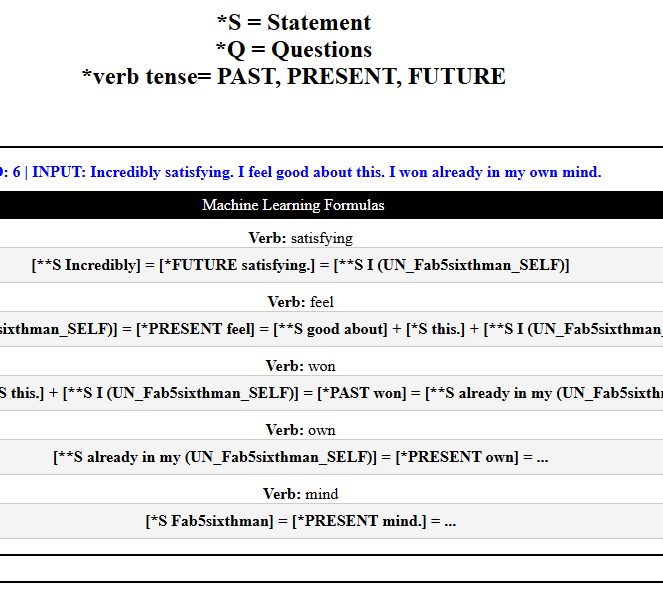
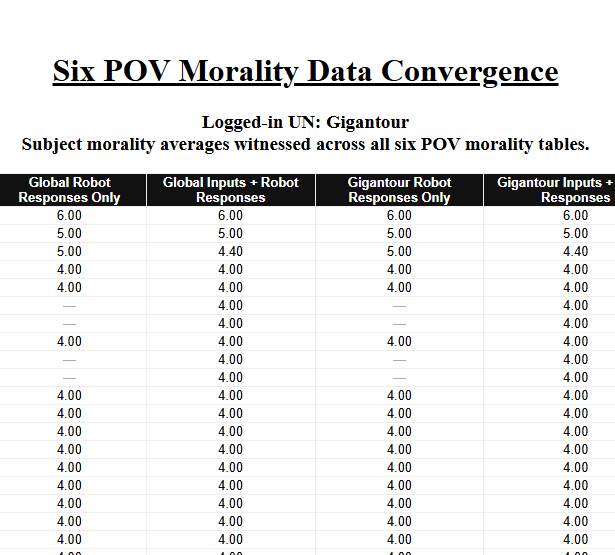
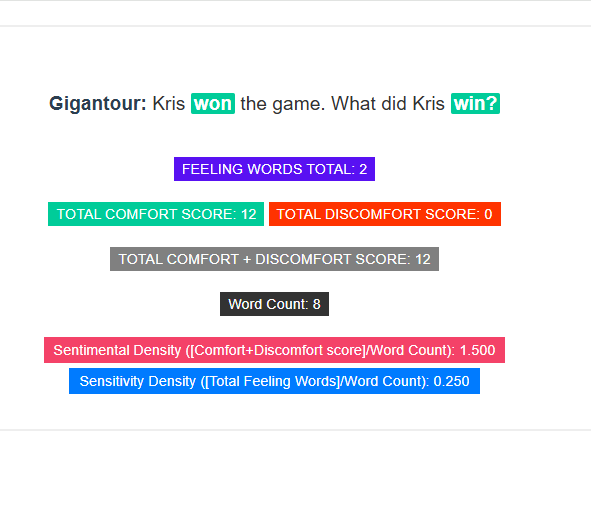
And that concept of, "limitations," was profoundly important in the beginning of my build. Whereby, understanding that the robot requires a closed system and cannot see or visualize without a camera, led me to understand early on that some computation would HAVE TO BE pre-programmed into the machine, at least initially until those gaps between human senses and computational reasoning could be closed and this realization then created a more perfect human system... not unlike what Neuralink is attempting to accomplish, as well. Furthermore, while I am not currently sitting atop the cutting edge of Ai... occupied by companies like; Google, Microsoft, Neuralink and Nintendo —who have been working in this space since roughly 1985 —I am positioned firmly in the second wave. In fact, upon completing,
"Smoke V2," I have now moved from being an outlier towards becoming a recognized entity alongside company's like; OpenAI, xAI, and Meta... all of whom became invested in Ai around the same time as my company in 2016 and 2017. Furthermore, might I add that for a graduate of Central Michigan University... this trajectory proves that technical merit is increasingly decoupled from pedigree. I was not hired by the tech giant's who had the chance to hire me less than 7 years ago, so, I chose to build their competitor instead (*with some assistance from a coding friend in Singapore named Justin whom I met on Fiverr.com) and with very little financing. Deepmind-Google and Microsoft all rejected my resume's in 2017, 2020 and 2021, NASA also rejected my resume in 2019, as well.
The Realities, Risks... and the Future of Ai
Building in a shady NYC apartment or while sleeping on Skid Row in LA, commuting to the Beverly Hills Library (*often while holding a restaurant job) is a psychological challenge. I have faced institutional skepticism—including an involuntary hospitalization in 2020—to reach this point. However, despite all of this I've remained steadfast because this level of Ai technology carries profound implications; concepts like, "mapped human awareness"—the ability for a computer model to understand human sightlines and rational blind spots—are potent and, quite frankly, terrifying to consumer's. You might call this concept, "mapping awareness," a concept that I've just recently worked my way toward achieving with my own models. Furthermore, another riske concept in Ai development is; predictive analytics and increased forsight, as well. And today, it's often the ability to understand beyond human understanding, 3-4 layers beyond human recognition that truly set's great Ai models apart and creates pinpoint accurate prediction models which can be used to predict both the future and the past, both socially and individually. Imagine knowing with pinpoint accuracy the mind of Julius Caesar? Or the future of Russia? That could become possible with this sort of Ai!
In Conclusion
Today, completing
Smoke V2 is a launchpad. My plans for Smoke V3, "Omni," are already in motion: the integration of; imagination, redundancy, discipline and visual thinking, along with motivation, and a deeper emotional learning schematic are all in store for version's 3-4-5. Nevertheless, multibillion-dollar corporations have and do often spend half a billion dollars or more... playing catch-up with Google, Microsoft and Nintendo, while I continue to iterate ON MY OWN with a dishwasher's salary. Yet, it is clear that like Apple Computer's in 1981... my journey has just begun and may be a long, solitary ascent, until Microsoft gives in to my financial needs like Apple before me. Nevertheless, I have already proven in many ways... that the gap between the individual and the corporate juggernaut (*or Ivy league pedigree) is bridgeable.
-William Larsen, Founder of CiviliansNews.com and the proud architect and lead engineer of
Smoke V2 on Artificialintelligenceproject.com